
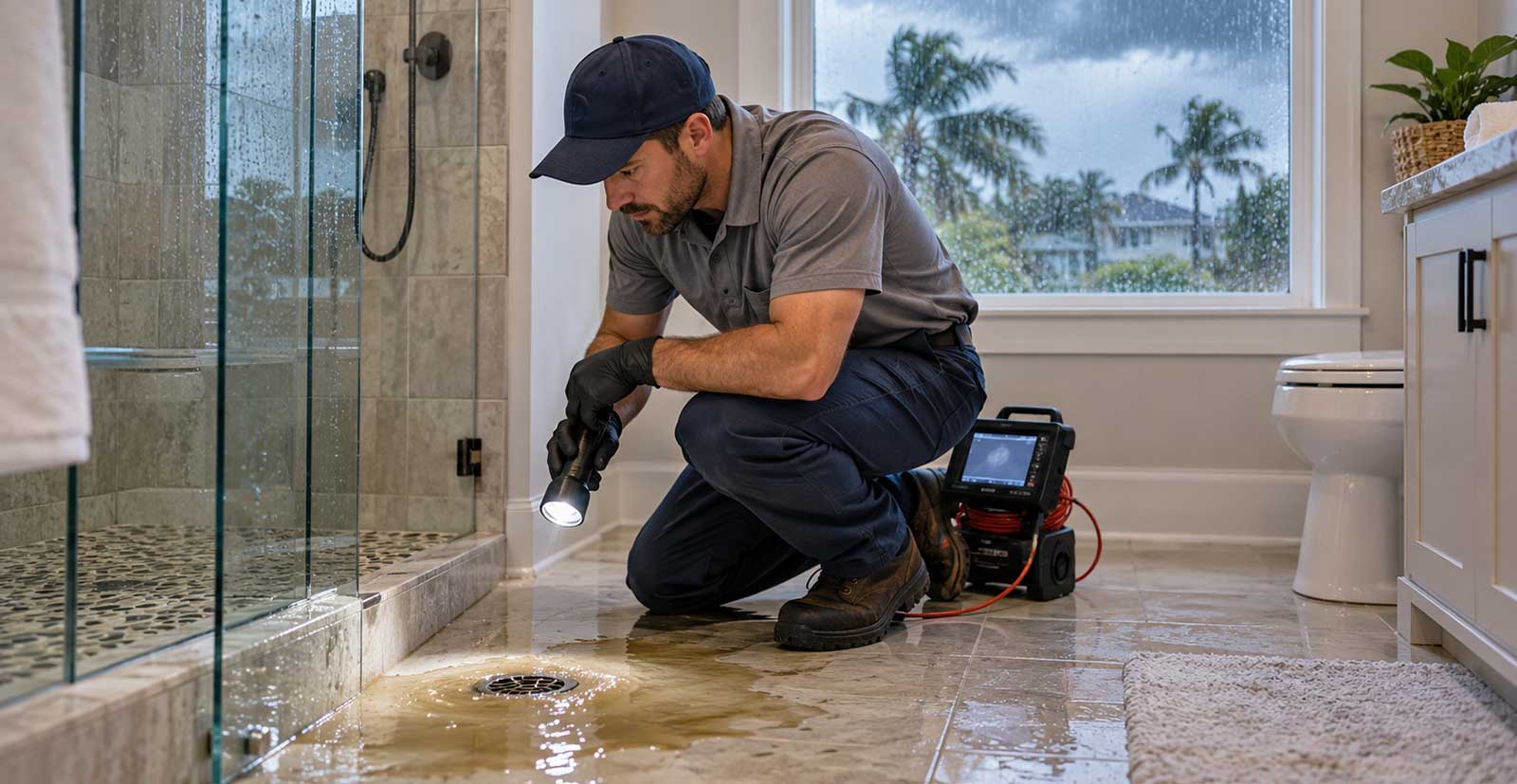
Sewer Backup After Heavy Rain? What Florida Homeowners Need to Know
Heavy Florida rain can overwhelm more than streets and storm drains. Sometimes, the first sign of trouble appears inside your home: a gurgling toilet, a slow-draining shower, or wastewater rising through a floor drain.
If you’re experiencing a sewer backup after heavy rain, the timing may not be a coincidence. Excess rainfall can put added pressure on sewer infrastructure, expose existing underground pipe problems, or disrupt septic system drainage.
For homeowners in Dunedin, Clearwater, Palm Harbor, and surrounding Tampa Bay communities, knowing what causes these backups, and when to call a plumber, can help prevent additional property damage and exposure to contaminated water.
Can Heavy Rain Cause a Sewer Backup in Your Home?
Yes. Heavy rainfall can cause sewer backups when excess water enters sanitary sewer systems or when drainage problems restrict wastewater flow. However, rain isn’t always the direct cause. Sometimes, a partially blocked or damaged sewer line becomes noticeable during wet weather.
According to the U.S. Environmental Protection Agency (EPA), rainwater and groundwater can enter sanitary sewer systems through cracks, faulty seals, and improper connections. This is known as infiltration and inflow (I/I).
When too much water enters the system, it can cause sewer overflows and backups.
Here’s how different plumbing conditions can lead to problems.
1. Rainwater Enters Damaged Sewer Pipes
Underground sewer pipes aren’t always completely watertight, especially as they age.
Cracked sections, deteriorated joints, and damaged connections can allow groundwater to seep into the system. During prolonged or intense rainfall, this additional water increases the volume the sewer must carry.
If the system already has limited capacity or an obstruction, wastewater may struggle to move away from the property.
2. Tree Roots and Existing Blockages Restrict Flow
Trees are common in established neighborhoods throughout Dunedin, Safety Harbor, and Palm Harbor.
Roots can enter sewer pipes through cracks or joints and may grow, trapping debris. Grease, accumulated waste, and other material can further restrict the opening.
A line that drains adequately under normal conditions may start showing problems when flow increases, or an existing obstruction worsens.
Heavy rain doesn’t necessarily cause the blockage. It may simply reveal a problem that has been developing for months or years.
3. Municipal Sewer Systems Become Overloaded
Sometimes, the problem extends beyond the homeowner’s private sewer line.
During significant rain events, excess groundwater or stormwater entering public sanitary sewers can increase demand on the collection system.
As a result, wastewater may back up into lower fixtures or vulnerable connections.
A professional plumber can evaluate the accessible portion of the private sewer line. If the symptoms suggest a problem in the public system, the local wastewater utility may also need to investigate.
4. Saturated Ground Affects Septic Systems
Homes with septic systems face a different challenge.
After prolonged rain, saturated soil may not absorb treated wastewater efficiently. This can slow drainage, cause sewage odors, or back up into the home.
The Centers for Disease Control and Prevention (CDC) advises homeowners to limit unnecessary water use during flooding and seek professional evaluation when septic systems appear damaged or malfunctioning.
Warning Signs of a Sewer Backup After Heavy Rain
Sewer problems don’t always begin with wastewater overflowing onto the floor.
Watch for these warning signs, particularly when several occur together:
A single slow bathroom sink may indicate a localized clog. However, several affected fixtures, especially when wastewater rises in the lowest drains, can indicate a larger drainage or sewer-line problem.
What Should You Do Immediately If Sewage Backs Up?
A sewer backup is more than an inconvenience. Wastewater may contain bacteria and other potentially harmful contaminants.
If sewage is entering your home, take these steps:
1. Stop using water.
Avoid flushing toilets, running faucets, doing laundry, or using the dishwasher. Additional wastewater entering the drainage system could worsen the backup.
2. Keep people and pets away.
Keep children and pets away from contaminated areas. Avoid direct contact with sewage or standing water that may contain sewage.
3. Stay clear of electrical hazards.
If water has reached outlets, appliances, or electrical equipment, do not enter the affected area or touch electrical controls while standing in water. Contact a qualified professional if you are unsure about electrical safety.
4. Avoid chemical drain cleaners.
Chemical drain cleaners are unlikely to solve a municipal sewer surcharge or damaged underground sewer pipe. They may also create additional hazards for anyone working on the system.
5. Call a qualified plumber.
If wastewater is entering the home or several fixtures are affected, professional diagnosis should not be delayed.
The CDC’s guidance for safely reentering flooded homes explains why sewage contamination and electrical hazards require special precautions.
For urgent situations, Plumbing Services by Gus provides 24/7 emergency plumbing service in Dunedin and surrounding communities.
How Do Plumbers Find the Cause of a Sewer Backup?
When a sewer backup happens after heavy rain, identifying the actual cause is more useful than simply clearing the nearest drain.
A plumber may start by reviewing which fixtures are affected, when the backup occurs, and whether it has happened before.
Depending on the findings, further diagnosis may include:
Video Camera Sewer Inspection
A sewer camera allows a plumber to examine accessible sections of the underground line for conditions such as:
Camera inspection can help determine whether the sewer line requires cleaning, targeted repair, or further evaluation.
Professional Drain and Sewer Cleaning
When accumulated waste, grease, or debris causes a blockage, professional drain cleaning may restore proper flow.
The right cleaning method depends on the obstruction’s location and nature.
Hydro Jetting for Stubborn Buildup
For certain sewer restrictions, hydro jetting may be recommended.
This method uses high-pressure water to remove suitable accumulations from the interior of drainage pipes.
However, hydro jetting isn’t appropriate for every line. Older, weakened, or severely damaged pipes may require another approach.
A plumber should evaluate the pipe’s condition before deciding whether high-pressure cleaning is suitable.
Sewer Pipe Repair
When inspection reveals significant structural damage, cleaning alone won’t correct the underlying issue.
Depending on the condition and location of the problem, a plumber may recommend targeted pipe repair, replacing a damaged section, or an appropriate trenchless repair method.
The key distinction is that a blocked sewer and a broken sewer aren’t the same problem, even when the symptoms look similar.
Can You Prevent Sewer Backups During Florida’s Rainy Season?
Not every sewer backup is preventable, especially when the problem involves public infrastructure or unusually severe weather.
However, homeowners can reduce some avoidable risks.
Pay Attention to Recurring Drainage Problems
A drain that repeatedly slows down or backs up deserves investigation.
If the same problem returns after cleaning, look beyond the fixture itself.
Keep Grease and Improper Materials Out of Drains
Cooking grease, wipes, paper towels, and other unsuitable materials can contribute to sewer obstructions.
Even products marketed as flushable may create problems in plumbing and sewer systems.
Address Known Pipe Damage
If a sewer inspection previously identified root intrusion, deteriorated joints, or damaged sections, don’t assume the issue will resolve on its own.
Repairing an existing problem may prevent a more disruptive failure later.
Ask About Backflow Protection
Some properties may benefit from an appropriately designed sewer backwater valve that helps reduce the risk of reverse flow from the sewer system.
These devices aren’t suitable for every plumbing configuration, and installation may involve code requirements, access considerations, and ongoing maintenance.
A licensed plumber can help determine whether a backwater valve is appropriate for your property.
Don’t Ignore the First Warning Signs
Gurgling toilets and recurring slow drains may seem minor until wastewater starts entering the bathroom.
Having the system evaluated before the next significant rain event can help identify problems while conditions are less urgent.
Local Sewer and Drain Expertise in Dunedin, FL
Plumbing problems can be especially frustrating during an already stressful Florida storm.
Plumbing Services by Gus is a family-owned and operated plumbing company based in Dunedin, serving homeowners and businesses throughout Pinellas, Pasco, Hillsborough, and Polk counties.
With local plumbing experience dating back to 1971, Master Plumbers on staff, and Florida plumbing license CFC-1428321, our team can investigate drainage problems and recommend solutions based on your plumbing system’s condition.
Our services include sewer camera inspections, professional drain cleaning, hydro jetting, pipe repair, and trenchless repair where appropriate.
Most importantly, we’re available when a plumbing emergency cannot wait.
Sewer Backing Up? Don’t Cuss… Call Gus!

f wastewater is coming back into your home or recurring drainage problems are raising concerns, don’t wait for the next storm to make it worse.
Contact Plumbing Services by Gus for professional diagnosis and repair.